The engineer behind a dozen classic honky-tonk albums
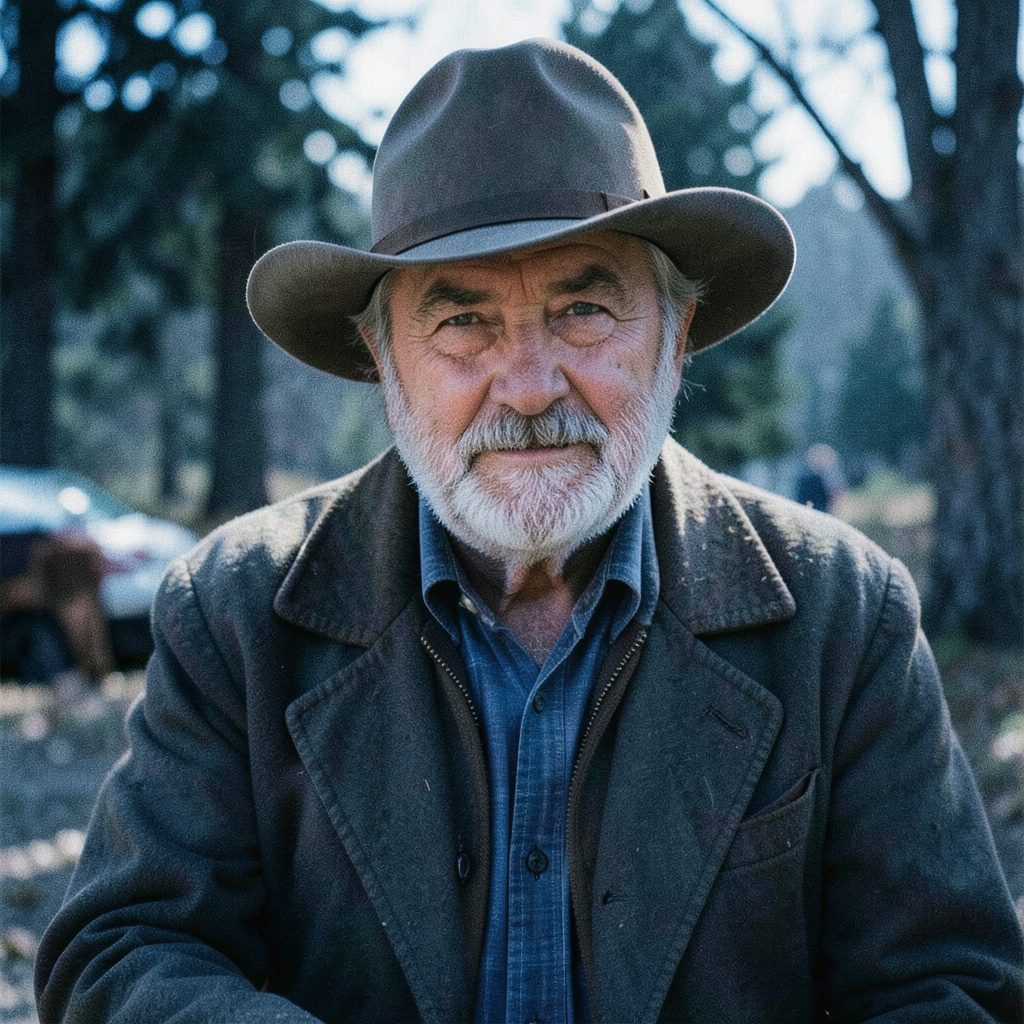
Honky tonk has never been a tidy genre, and the engineer Hollis Vance made sure of it. For nearly twenty years he tracked barroom records in a converted corner garage off Depot Street in Nashville, and the dozen classic honky-tonk albums bearing his fingerprints still carry the clatter of a coin machine, the scrape of bar stools and the rattle of ice in a bucket. Vance was no celebrity. He never collected a producer's credit, never walked a red carpet, and never gave an interview longer than a paragraph. Yet the records he mixed and cut for Junior Meeks, Wade Calloway, Iris Lee Henley and the Silver Creek Band shaped how the entire genre sounds, in Nashville and everywhere else a jukebox still runs past closing time.
He learned the trade the hard way, starting with the machines themselves. Born in Bowling Green, Kentucky, in 1946, Vance spent his adolescence in the back room of his father's jukebox repair business, listening to Wurlitzers and Seeburgs cycle through their relays and coin slots. That mechanical clatter became the pulse of everything he recorded later. At nineteen he took a job at a Bowling Green radio station, cueing songs on a reel-to-reel machine running at seven and a half inches per second, learning to place a needle on a scratchy country single and to judge a take by the feel of the tape rather than the needle on a meter. He moved to Nashville in 1971 with a duffel bag of reels, a borrowed microphone and a cousin's lease on a brick garage with a leaking roof.
What made Vance unusual was his refusal to polish the grime out of a record. He used to tell his engineers that he was recording the room, not the singer, and the room usually won. He left the cash register ringing, the fluorescent transformer humming, the drummer complaining about the temperature and the band arguing about the set list. His masters carried a low hiss floor and a warm tape saturation that record buyers initially treated as flaws. For a genre built on Saturday night economics, cheeky double entendres and the sad glow of a neon Budweiser sign, that grime was the point, and Vance treated it like a member of the band.
The records travel remarkably well to Australia, where honky tonk has found its own stubborn market. Country Queensland pubs still trade in amplifier volume and beer, the dance floor fills early at the arvo sundowner sessions, and the truck-stop jukebox tradition survives in venues from the Newell Highway to the back streets of Tamworth. Streaming has spread the sound further still, and Roothog Radio has kept vintage honky tonk in rotation since it began publishing under its Purveyors of Honky Tonk banner in 2010. Its schedules, song history and request line have quietly done what Vance did with a console: keep the material in front of listeners who would never find a garage studio in East Nashville.
Hollis Vance and the garage on Depot Street
The garage itself was barely a professional space. Vance assembled an eight-channel desk from salvaged parts, ran two three-track machines at fifteen inches per second, and hung a single ribbon microphone above a corner where a jukebox had once stood. Musicians crowded in with their own amps, because the engineer of a honky tonk session understood that a band playing too quietly is a band playing badly. He set the levels so the guitar amp could bleed into the vocal microphone and let the piano lid rattle at the edges of a chorus.
He kept a logbook, a plain spiral notebook with the days of the week down the left margin. Each entry lists the noises of the session: the ring of the door, the hum of the cooler, the click of the cigarette lighter, a dog on the porch next door. Engineers came and went, but the notebook stayed, and the session men who worked with Vance still quote it. On a good night the notebook read like a set list for the record itself, which is how a barroom ends up in your speakers long after the barroom is gone.
His method produced a peculiar kind of honesty. Honky tonk songs are written to be sung over a clinking glass, so Vance mixed them as though the glass were already there. He left space between the vocal and the band, so the singer had to work for the top of a phrase rather than being handed a finished surface. On the slower records, usually the ballads that broke the tempo of the album, he did the opposite and let the vocal sit right on top of the band with nowhere to hide.
The tape, the console and the barroom signature
The equipment mattered less than the patience. Vance recorded most sessions in winter, in an unheated space where the band players could see their breath and the tape machine behaved better in the cold. Breath and the creak of chair legs became part of the arrangement, and the hiss of the tape became a kind of room tone that no mixing desk in a commercial building could reproduce. When digital arrived in the mid-nineties and everybody else in Nashville began chasing clinical, radio-ready country, Vance kept his quarter-inch machine and his ribbon microphone.
What that gave the catalogue was a sonic palette distinct from mainstream Nashville. A Telecaster's twang sat right against a honky-tonk piano, the pedal steel leaned into the vocal, and the whole thing was mixed slightly hot so the guitars clipped the way a barroom amplifier clips when the knob is turned past noon. The blues in the chords came out of the room rather than out of the console, and the entire record seemed to be recorded from three tables back and one beer to the left. Listeners who know the sound can still pick his work blind.
That sound reaches Australian listeners in ways Vance never planned for, including through the Krhv Radio stream, where his records turn up regularly enough to have their own recognisable stretch of programming. The appeal is easy to understand: this is music about working people in rooms that cost less than a dinner, recorded by a man who cared more about what the room sounded like than what the label wanted.
A dozen albums and one pair of ears
Between 1974 and 1998 Vance cut twelve albums he considered his own work, whether or not his name appeared on the sleeve. Junior Meeks' Drinks at the Last Honky Tonk, recorded in 1976, established the blueprint. Wade Calloway followed with Neon Barroom Blues in 1979, then Iris Lee Henley's devastating Two Dollars, One Heart in 1981 and the Silver Creek Band's Railroad Whistle and Wine in 1983. Mavis Tolliver's Heartbreak in Neon came out of the garage in 1987 and remains the one fans argue about most.
The nineties records are harder and funnier. Buck and the Lonesome cut Highway 49 and a Broken Radio in 1990, the Copper River Boys answered with Loud, Cheap and Loaded in 1992, and Cal Hargrove made Cheap Beer, Expensive Songs in 1994. Vance's last two, Leroy Dunn's Saturday Night Honky Tonk from 1996 and Ruby Jean Calloway's Cheque and a Sob from 1998, were tracked in the same garage where his first had been made, on the same machine, in the same unheated weeks.
The Nashville mainstream passed him by, which suited him. Those records charted poorly, were written off as relics, and then found their people. Their tapes and the transfers made from them now sit in the archives of online country stations and turn up in request lines, where a listener will ask for the Wade Calloway record because a truckie played it at 4am between Rockhampton and Cunnamulla. Nothing in the studio's history is more telling than the fact that his records keep working hardest when they are not being sold.
Where to start with the Vance catalogue
The twelve albums reward a deliberate approach rather than a marathon. The early sides show the method with fewer layers, the middle period shows the arrangements opening up, and the last two carry the whole room with them. Anyone who wants the argument for the nineties sound more broadly can find it in a companion piece on underrated honky tonk albums, which catches up with records Vance recorded alongside artists who took a more polished route.
- Junior Meeks — Drinks at the Last Honky Tonk (1976) — the session that set the template, with the coin machine audible on the count-in and the band playing like the room was too small for it.
- Wade Calloway — Neon Barroom Blues (1979) — the hottest of the garage records, all Telecaster and clipped amps, with Calloway's voice pushed right up against the microphone.
- Iris Lee Henley — Two Dollars, One Heart (1981) — the one to try if you want the quiet side, recorded in a single room with a piano and almost nothing else.
- The Silver Creek Band — Railroad Whistle and Wine (1983) — band sound rather than solo star, the best example of how Vance handled a full group in a confined space.
- Mavis Tolliver — Heartbreak in Neon (1987) — the most debated record in the catalogue and, for many listeners, the one that proves the whole approach worked.
Why the records still fill Australian dance floors
Vance's catalogue travels because the places it describes are recognisable anywhere a cold beer costs less than a song. You can stand in a shouty pub in Toowoomba or a small bar in New Farm, Brisbane, and hear the same arc in his records that the engineers captured: a fast, loud, grinning number to get the crowd moving, then a slow ballad about a bill that cannot be paid. Sydney's Enmore and Surry Hills venues put the same records on the decks, and at the Tamworth Country Music Festival the pickup scenes and backroom barbershop sessions carry more than a nod to the style Vance recorded.
Road culture has carried the sound just as faithfully. A Charbray hauling three trailers down the Newell with a honky tonk record playing is a familiar sight, and the truck-stop tradition of a coin-op jukebox fed into the songs Vance tracked. Triple J's Double J and the ARIA country charts have widened the audience for old barroom records, and younger Australian listeners now arrive at Vance through the same door as the truckies did, which is to say they hear something true in a room with a bit of weather in it.
His records remain in active circulation, and the survival of that catalogue says something about how honky tonk is transmitted: by hand, by request and by repetition, rather than by chart position. The engineers who shaped the sound were rarely named, and Vance was no exception until recently, when listeners began tracing the hiss, the ribbon and the hum back to one set of ears in East Nashville.
You can hear his work the way it was meant to be heard, with the room still in it. Tune in to the Roothog Radio schedule, look through the song history to see when his records come around, and use the request desk to ask for a Vance cut that the schedule has been ignoring. Monthly supporter subscriptions keep the archives growing and the shelves stocked, while the music store and the merch range put a piece of that Nashville garage in your own living room. Put a record on, turn the volume up past polite, and let the coin machine clatter where it belongs.